Introduction
Recently I noticed a very interesting video about a new WSJT-X mode called JTTY (Ref.1). The concept here is a mode similar to RTTY keyboard to keyboard communications but with weak signal detection properties. JTTY is included in the latest test release of WSJT-X 3.2.0-rc1 available on the git hub page under “All Releases” towards the bottom (Ref.2). The DX Zone article is a good overview of the properties of JTTY (Ref.3).
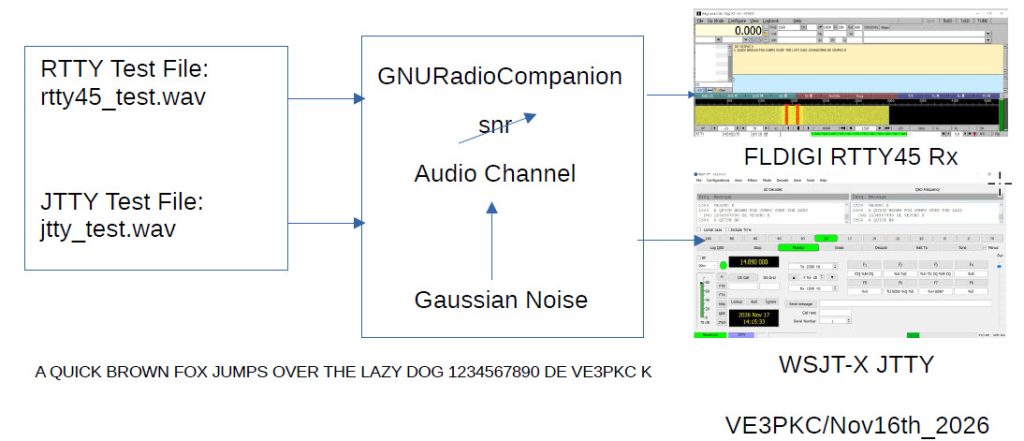
I will use a procedure from a recent post (Ref.4) to compare RTTY and JTTY with baseband AWGN. A simple data test message is read into FLDIGI & WSJT-X to generate Test RTTY45 & JTTY wav files. These test files are played through a GNURC channel with additive baseband Gaussian noise and then into FLDIGI & WSJT-X receivers where the performance is evaluated. This is shown in Figure 1.
RTTY Baseband AWGN Performance
| Noise_rms = SNR = 0.64/0.x | Character Errors Msg = 64 characters |
| Noise_rms = 0.1 SNR = 8dB | 0 errors 100% copy CER = 0.00 |
| 0.4 SNR = 2dB | 0 errors 100% copy CER = 0.00 |
| 0.5 SNR = 1.1dB | 3 errors = 3/65 CER = 0.05 |
| 0.6 SNR = 0.3dB | All errors CER = 1.00 |
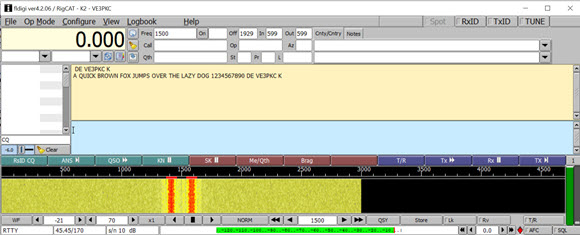
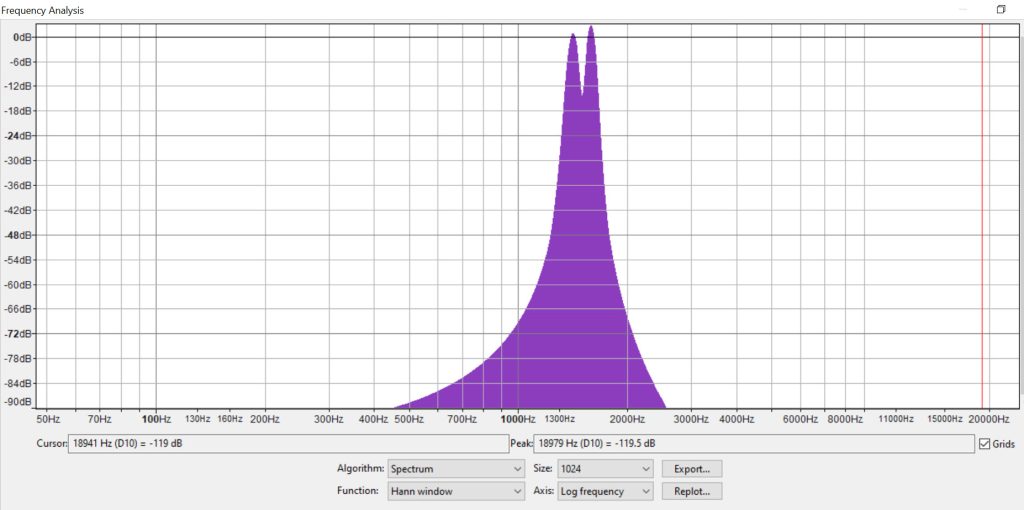
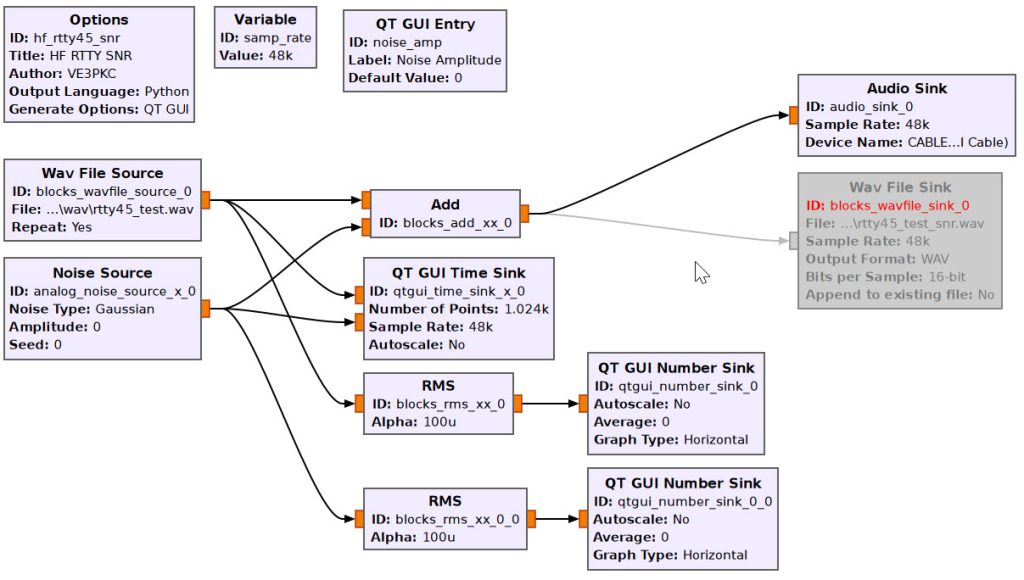
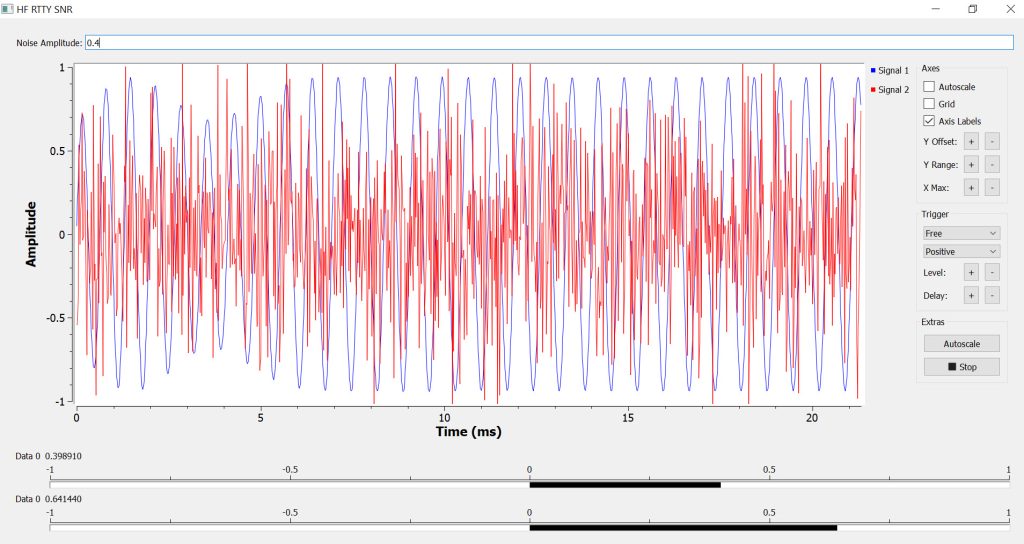
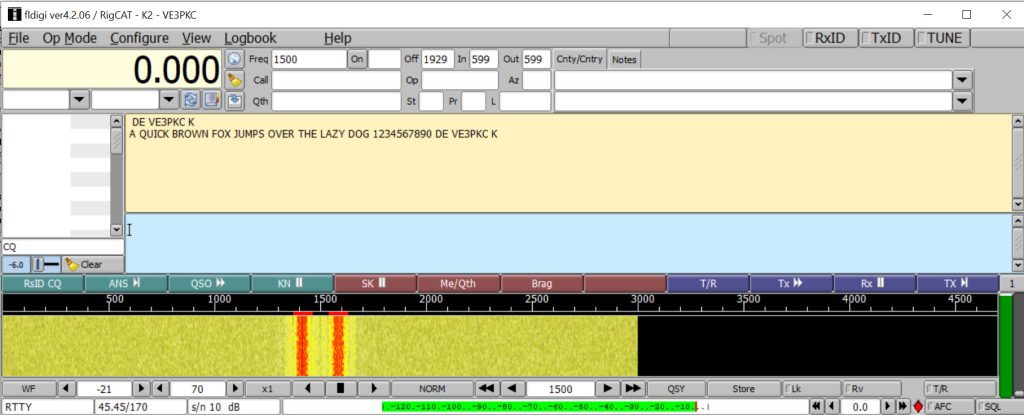
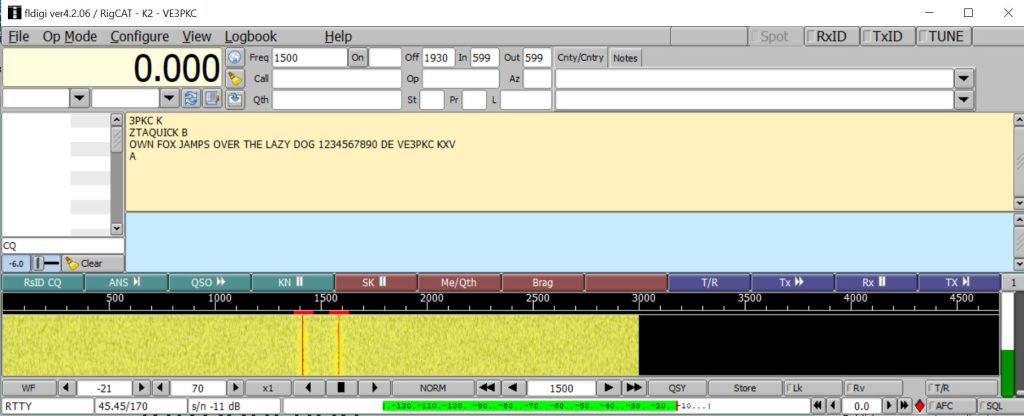
Figure 2 shows the spectrum of the RTTY45 test message centred at 1500Hz with tone spacing of 170Hz and 10dB BW = 296Hz. Figure 3 shows the GNURC schematic for addition of AWGN. RMS blocks allow measurement of power. The output wav file is sent via VBCable to the input of FLDIGI. Figure 4 shows the channel output with noise power std dev = 0.4 and signal power at 0.64. Figures 5/6 show FLDIGI receive with noise of 0.1 & 0.5. Figure 7 shows the performance with errors starting to occur for SNR < 2dB.
JTTY Baseband AWGN Performance
| Noise_rms = SNR = 0.50/0.x | Character Errors Msg = 64 characters |
| Noise_rms = 0.1 SNR = 7dB | 0 errors 100% copy CER = 0.00 |
| 0.5 SNR = 0dB | 0 errors 100% copy CER = 0.00 |
| 7.0 SNR = -11.5dB | 0 errors 100% copy CER = 0.00 |
| 8.0 SNR = -12.0dB | 5 errors/64 CER = 0.08 |
| 11.0 SNR = -13.4dB | All Errors/64 CER = 1.00 |
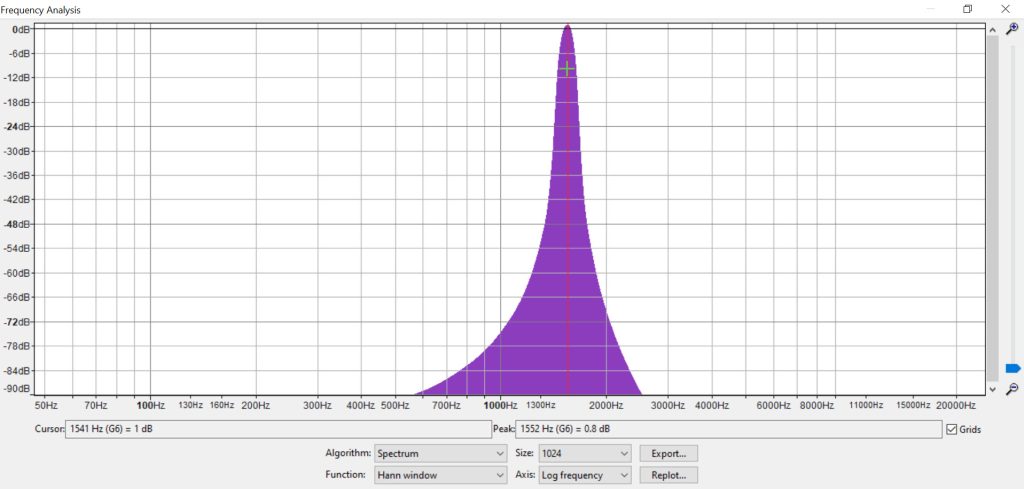
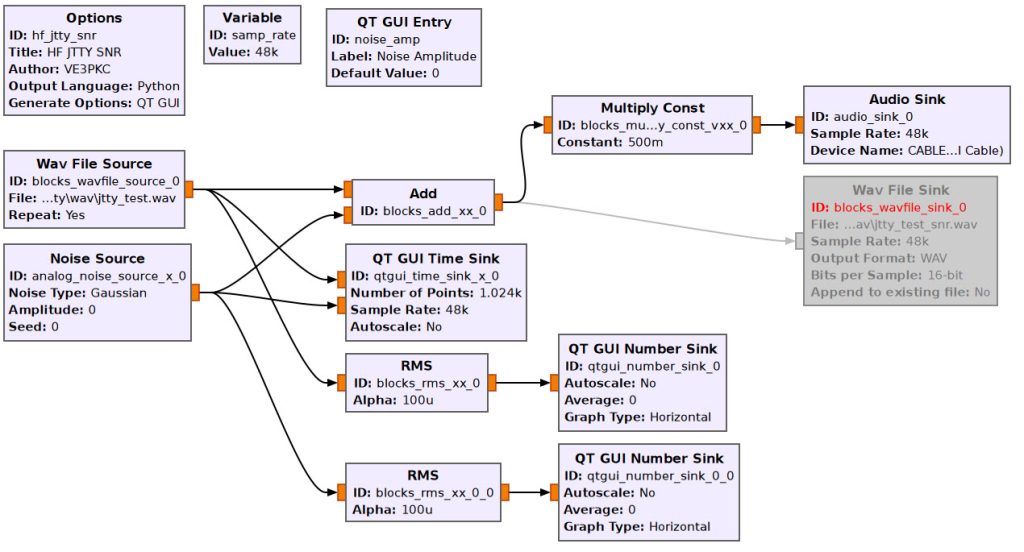
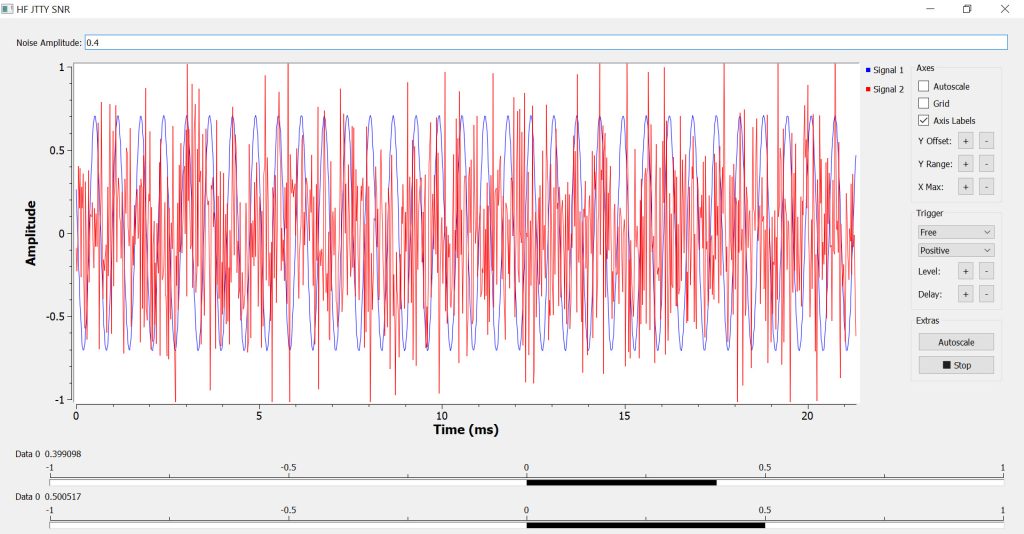
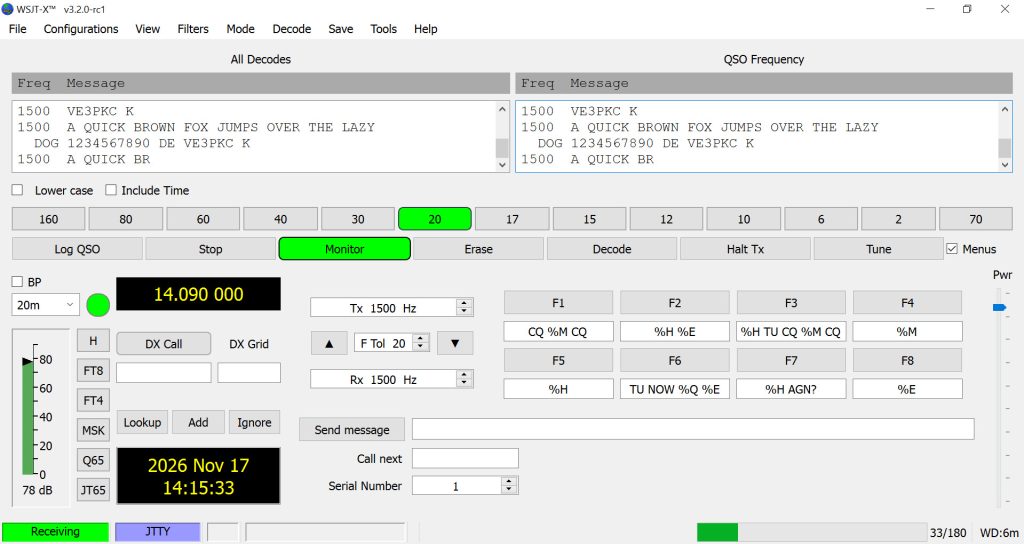
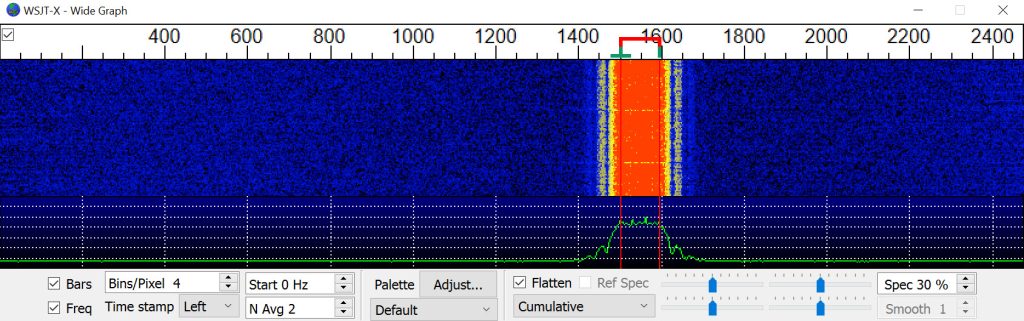
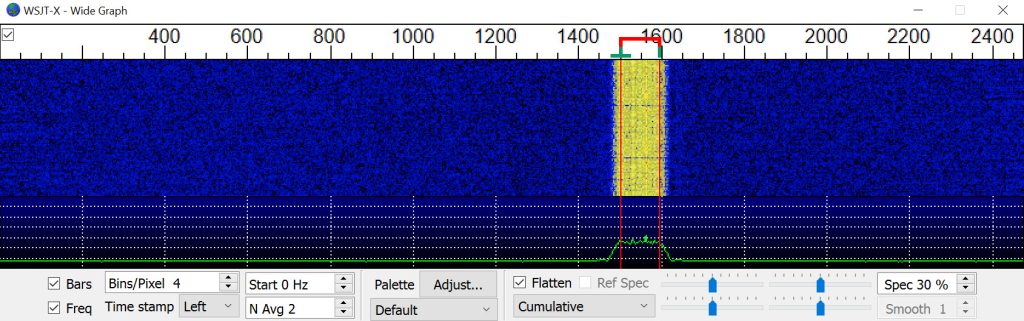
Figure 8 shows the spectrum of the JTTY test message centred at 1500Hz with 10dB BW = 179Hz. Figure 9 shows the GNURC schematic for addition of AWGN. RMS blocks allow measurement of power. The output wav file is sent via VBCable to the input of WJXT-X. Note inclusion of a variable opt pad so as not to overdrive WSJT-X. Figure 10 shows the channel output with noise power std dev = 0.4 and signal power at 0.50. Figures 11/12 show WSJT-X receive with noise of 0.1. Figure 13 shows WSJT-X receive with noise of 0.8. Figure 14 shows the performance with errors starting to occur for SNR <= -11.5dB.
RTTY vs. JTTY AWGN Performance
Comparing the performance of RTTY45 and JTTY we can see a difference in SNR thresholds of 2dB & -11.5dB = 13.5dB which is considerable!
HF Radio Telecommunications Learn by Simulation
Please send your comments, questions and suggestions to:
contact:

References
#1. – “JTTY Don’t Overlook This No Compromise Digital Mode”
https://www.youtube.com/watch?v=U01AktAezqk
#2. – “WSJT-X Official Home”
https://github.com/WSJTX/wsjtx/releases
#3. – “JTTY Digital Mode: WSJT-X 3.2 Brings RTTY-Style Speed”
https://www.dxzone.com/jtty-digital-mode-wsjt-x/
#4. – “HF SSB vs. Digital Voice Radio AutoEncoder RADE”
https://jeremyclark.ca/wp/telecom/hf-ssb-vs-digital-voice-radio-autoencoder-rade/
