Introduction
In the previous post I was able to receive MSK144 meteor scatter transmissions on 6m using the RTL-SDR (Ref.1). I thought it would be worthwhile to see how robust this protocol is using a simple GNURadio channel model. In the QEX design paper the following performance figures are given (Ref.2):
SNR>0dB, almost all frames decoded correctly
SNR<-1.5dB, 40% of frames decoded correctly
SNR<-4dB, 0% of frames decoded correctly
SNR<-8dB, 0% of frames decoded incorrectly (undetected crc false decodes)
MSK144 Channel Test Setup
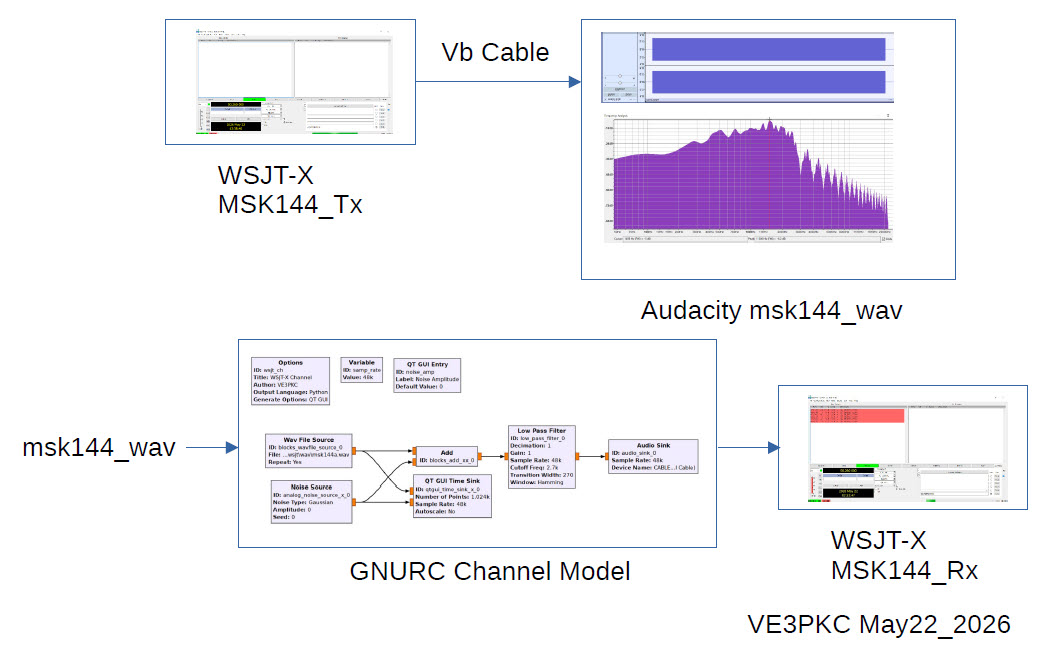
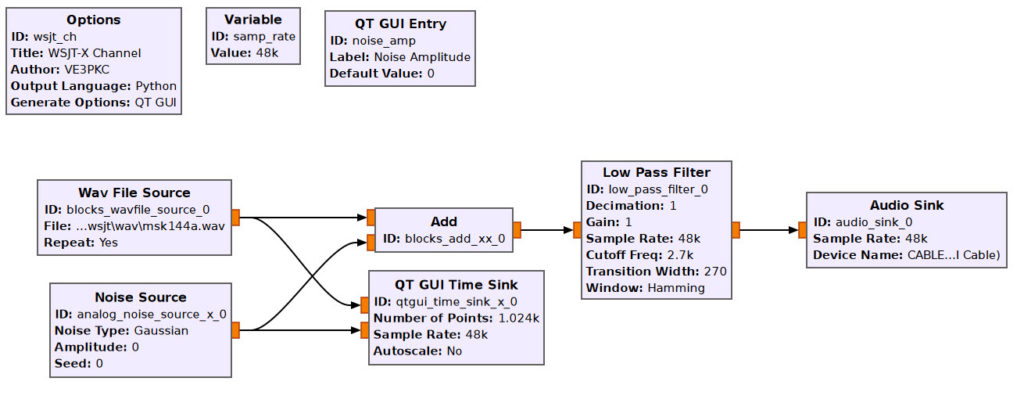
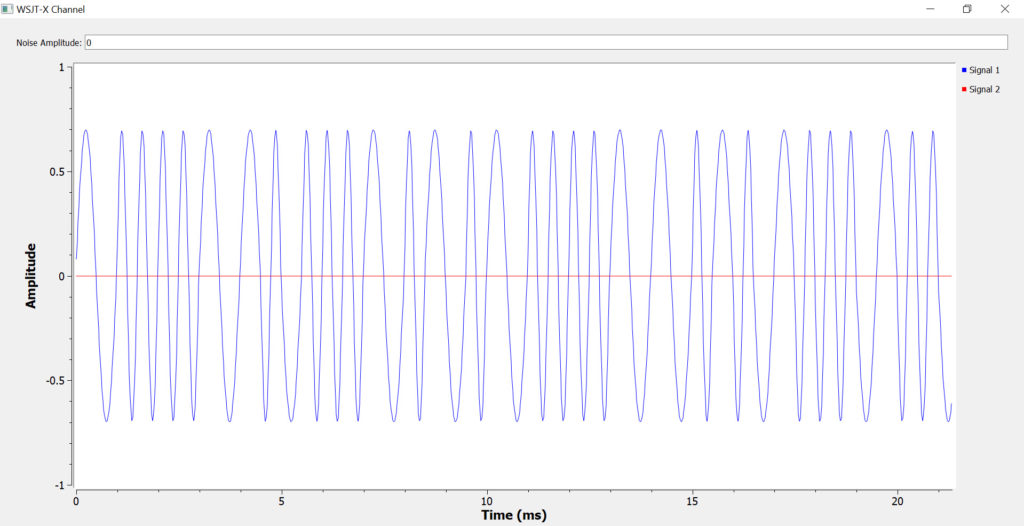
Figure 1 shows the channel test setup. WSJT-X MSK144 is setup to transmit and a sample is fed into Audacity and saved as a .wav file. In this case the .wav file was 15seconds long. This .wav file is fed repeatedly into the GNURC test model as shown in Figure 2. Gaussian random noise is added to the signal, low pass filtered and then fed back into WSJT-X MSK144 receive to detect decodes. A QT GUI entry block allows real time noise adjustment until zero decodes are reached. This is a simplified baseband model which does not include frequency error, doppler or phase noise.
MSK144 Channel Test Results

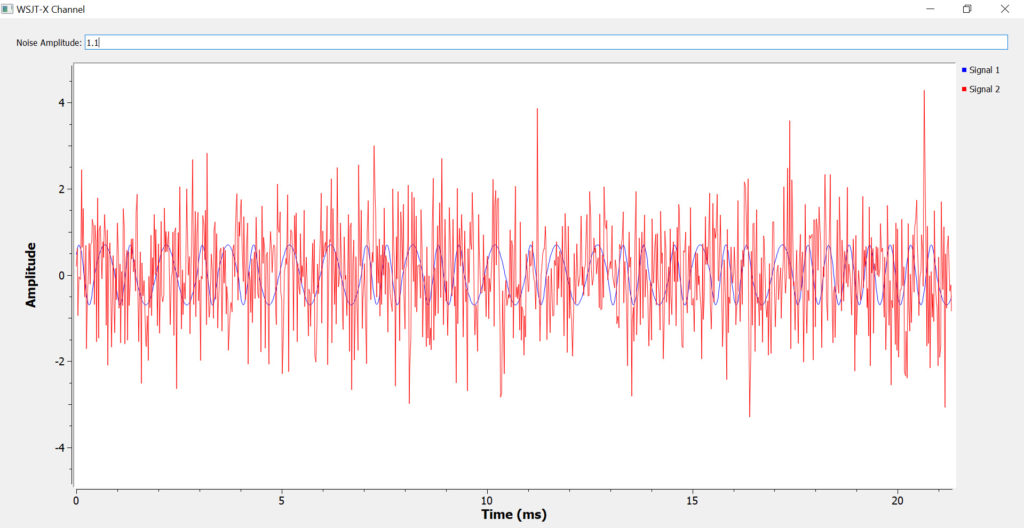

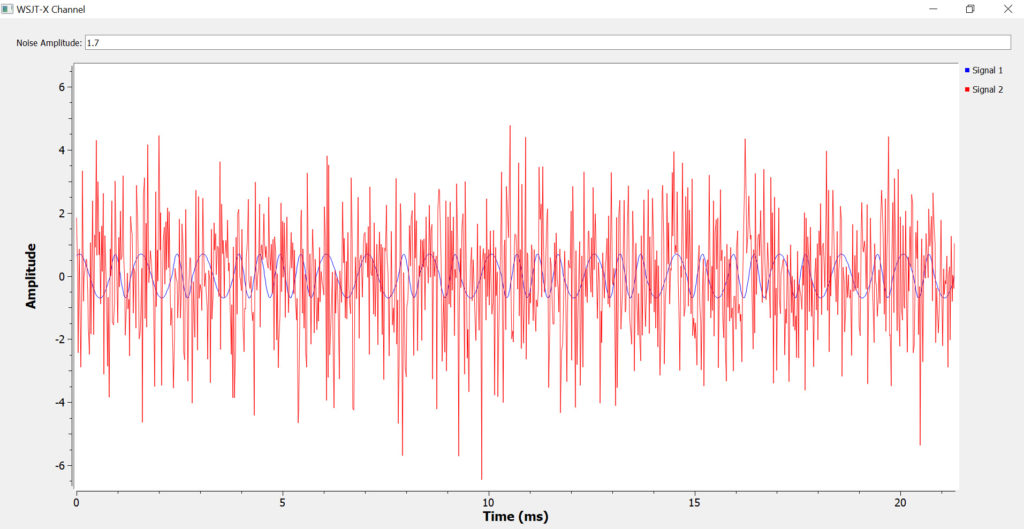
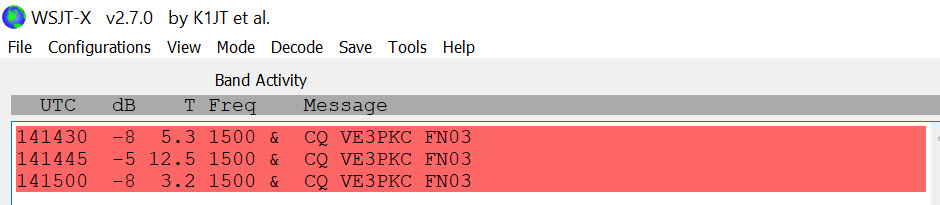
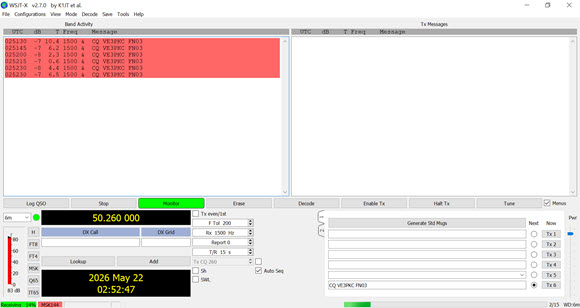
Figures 3/4 show the test results for no added noise, with a receive reading of +24dB. Figures 5/6 show results for noise = 1.1 with a receive reading of 0dB. Finally Figures 7/8 show results for noise = 1.7 and receive reading of -8dB which is the threshold. The noise amplitude in the GNURC block is the Gaussian noise standard deviation.
SNR figures from the GNURC model:
Vsig_peak=0.7
Vsig_rms=Vsig_peak/1.414=0.495
Vnoise_peak=2
Vnoise_dev=1.7
SNRpeak=20log10(Vsig_peak/Vnoise_peak) = -9.1dB
SNRrms=20log10(Vsig_rms/Vnoise_dev) = -10.7dB
These results are similar to the WSJT-X results.

Please send your comments, questions and suggestions to:
contact:

References
#1. – “RTL-SDR for Meteor Scatter”
https://jeremyclark.ca/wp/telecom/rtl-sdr-for-meteor-scatter/
2. – “The MSK144 Protocol for Meteor-Scatter Communication”, ARRL QEX Magazine September/October 2017.
