Introduction
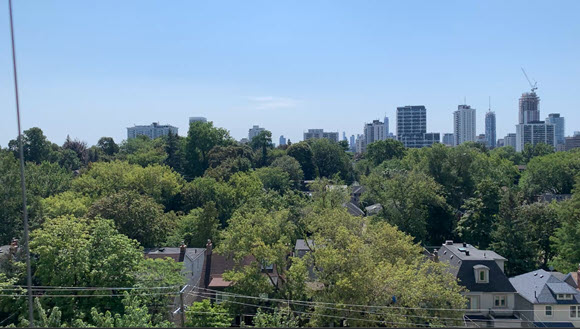
In a previous post I was able to receive AIS contacts from my home location even though surrounded by huge new condos (Ref.1). Recently I moved because my radio horizon was now completely blocked. My new QTH looks due south with no buildings in the immediate vicinity. So I wanted to see how the AIS reception compared. The increased reception is amazing.
Equipment Block Diagram
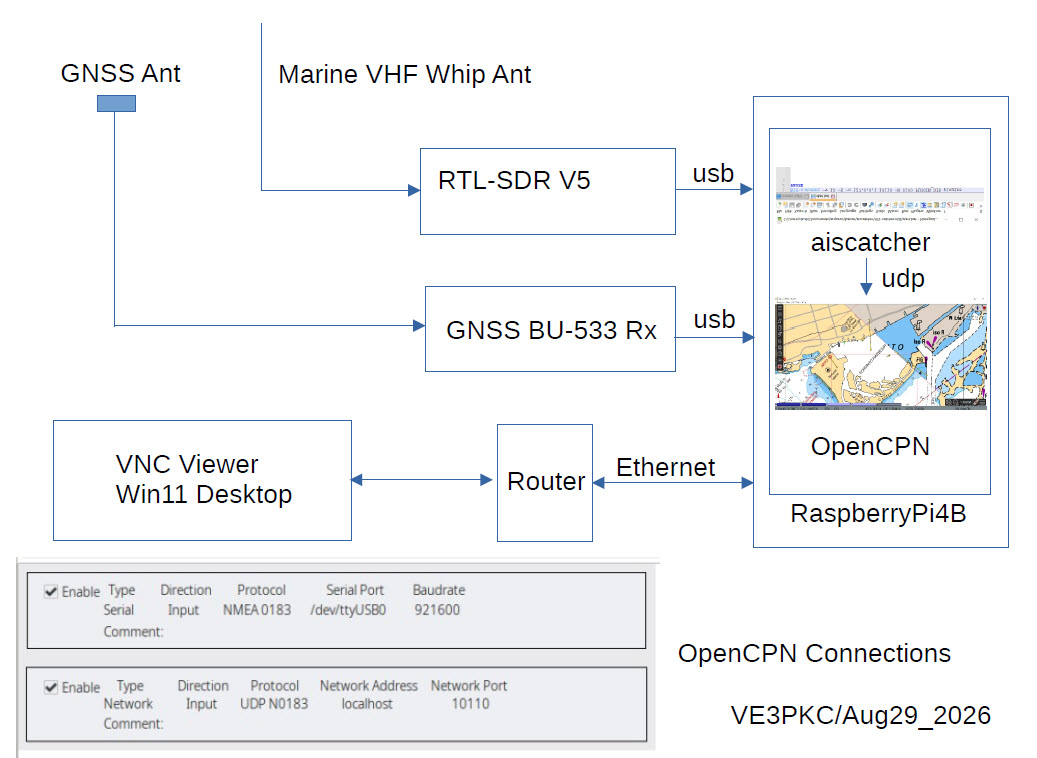
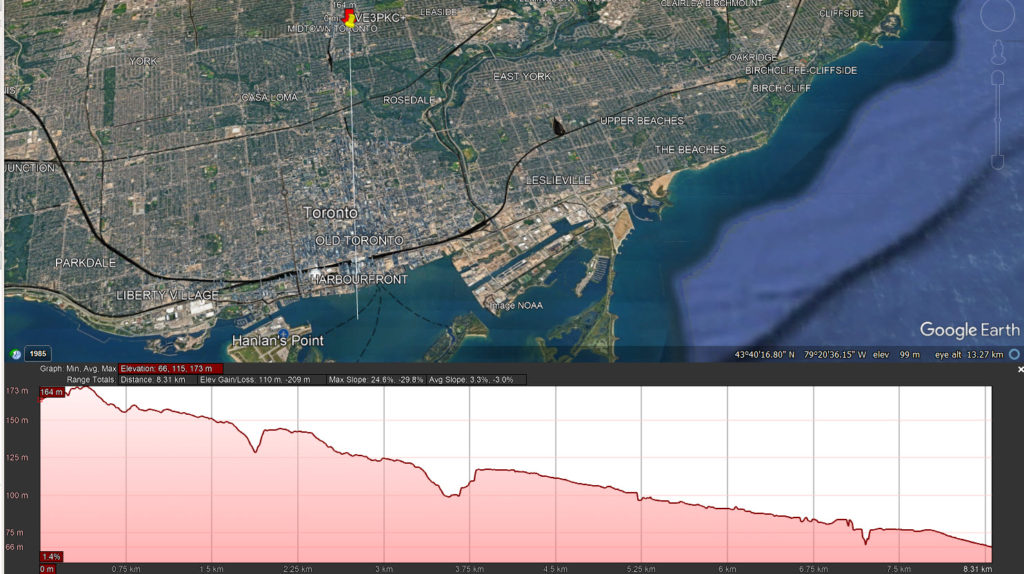
Figure 1 shows the equipment block diagram. This is the same setup I used in Ref.1 with the same Marine antenna and GNSS unit. The only difference is that I am not running headless but ethernet to my router and VNC viewer to my desktop. Figure 2 shows a Google Earth elevation profile from my QTH+ to the middle of Toronto Harbour for reference.
Reception Results on OpenCPN
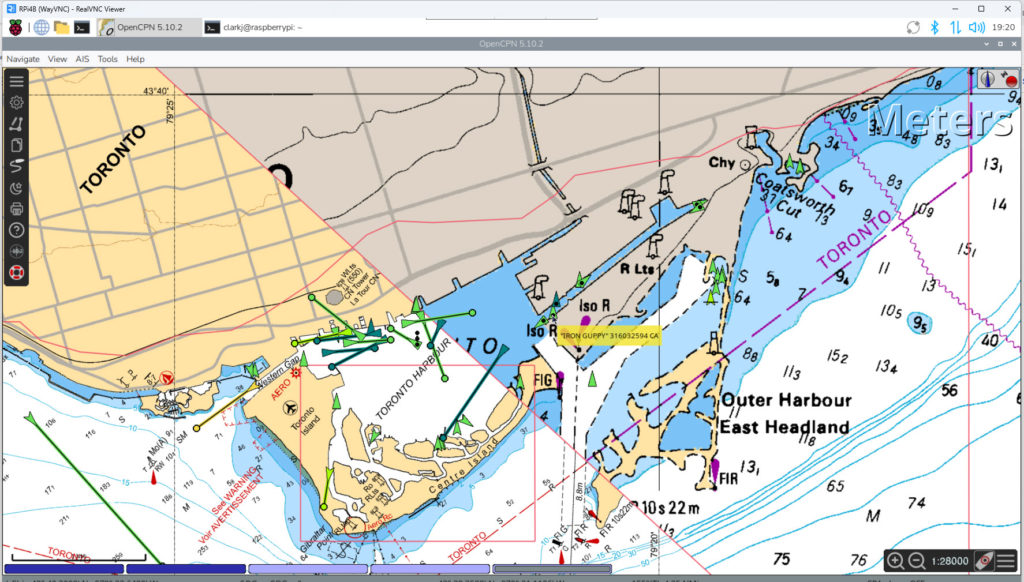
Figure 3 shows the AIS contacts received on OpenCPN. Compared to results from my previous location (Ref.1) in November 2024 you can see the increased number including to the West/East of the harbour area. This is of course due to the higher elevation and lack of near by obstructions.
Propagation Calculations
We can do some simple propagation calculations assuming only free space loss and then compare them with the relative receive levels as measured by AIS-catcher, the difference being the obstruction loss (Ref.2/3).
AIS_tx=+12.5W_classA=41dBm, 2.0W_classB=33dBm
d=8.3Km, freq=162MHz
Gtx=Grx=0dBi (assume omnidirectional)
Ltx=2.2dB (coax cable)
EIRP=41dBm-2.2=38.8dBm_classA, 33dBm-2.2=30.8dBm_classB
Lfs=32.44 + 20log(Freq_Mhz) + 20log(d_Km)=95dB
AIS_rx=38.8-95=-56.2dBm_classA, 30.8-95=-64.2dBm_classB
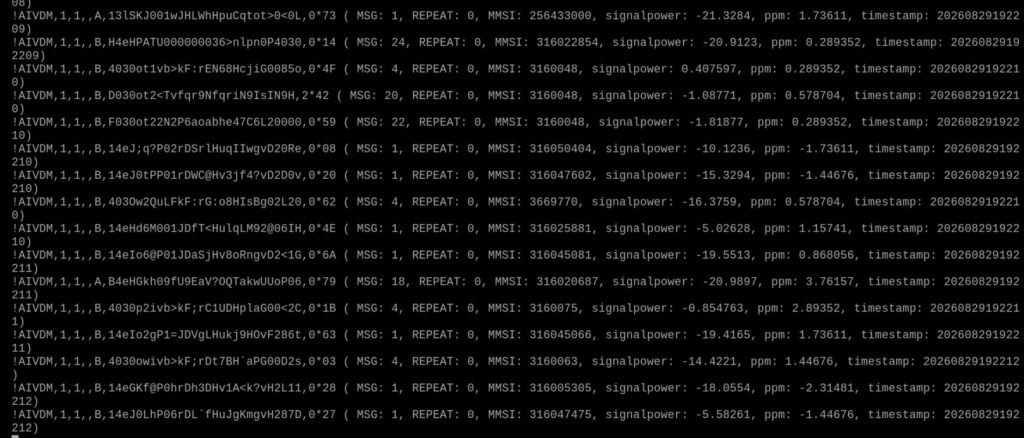
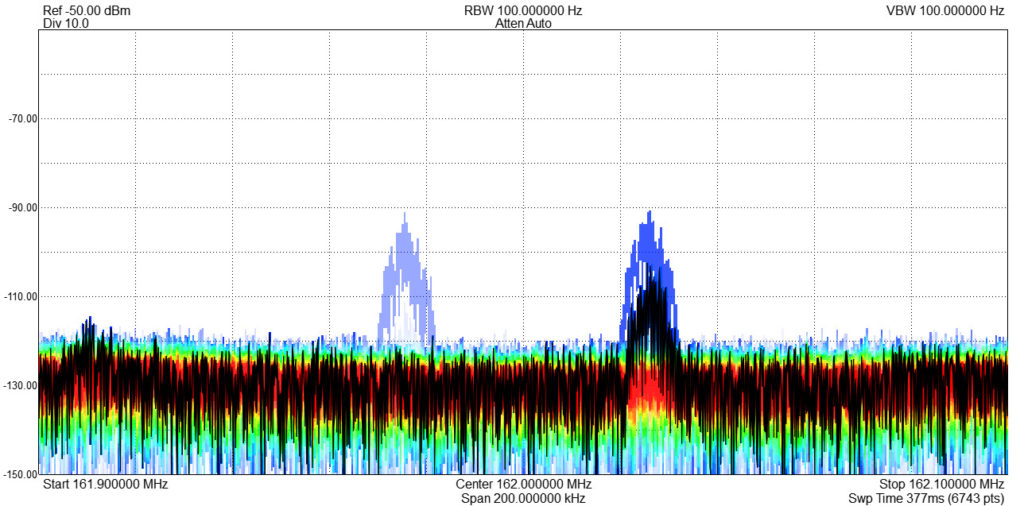
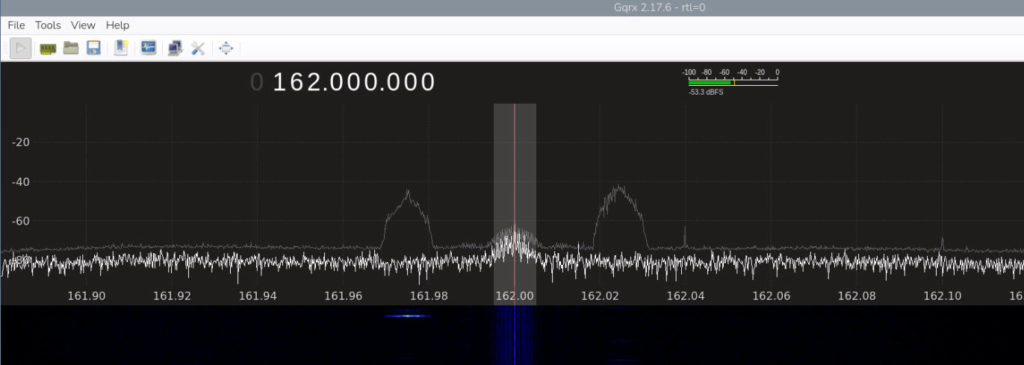
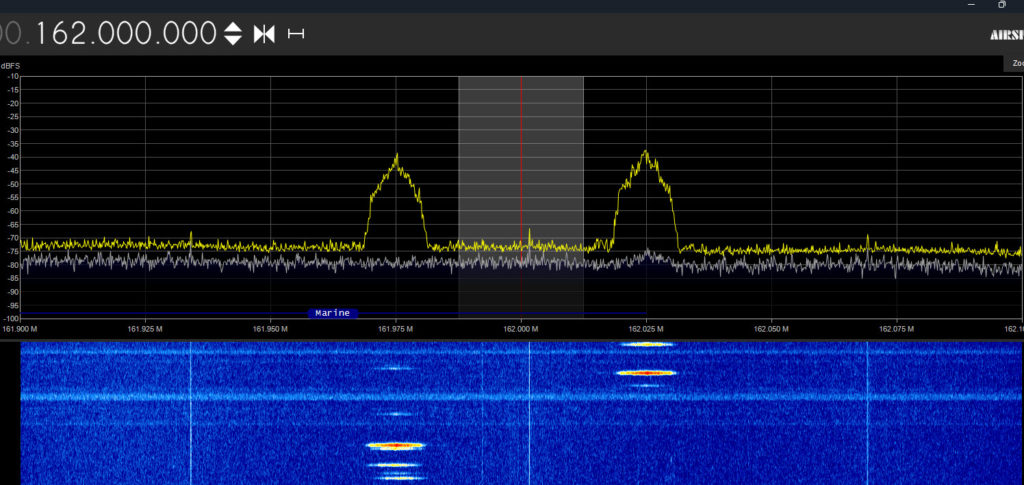
The most powerful Rx signal on AIS-catcher has a signal power 0.4 and weakest -21dB as in Figure 4. This can be correlated with the calibrated receive spectrum as shown in Figure 5. The Signal Hound Spectrum Analyzer was put in persistence mode to capture the peak Rx levels. So roughly we can say that 0.4dB = approx -90dBm. Noise level is down at -120dBm. Gqrx says peak level at -40dB with noise at -75dB as in Figure 6. SDR# says peak level at -40dB with noise at -75dB as in Figure 7. In both cases for Gqrx/SDR# the Rx Gain = 30dB. Free space loss for ClassA gives a Rx level of -56dBm. This means there is approx -56 – (-90)dB = 34dB of obstruction loss probably caused by very high buildings right up from the harbour in the downtown area and some initial earth bulge.
Please send your comments, questions and suggestions to:
contact:

References
#1. – “GNSS & AIScatcher on RaspberryPi4”
https://jeremyclark.ca/wp/telecom/gnss-aiscatcher-on-raspberrypi4/
#2. – “RF Signal Propagation Calculations_1”
https://jeremyclark.ca/wp/telecom/rf-signal-propagation-calculations_1/
#3. – “Splat! – Marine VHF Propagation”
https://jeremyclark.ca/wp/telecom/splat-marine-vhf-propagation/
