Introduction
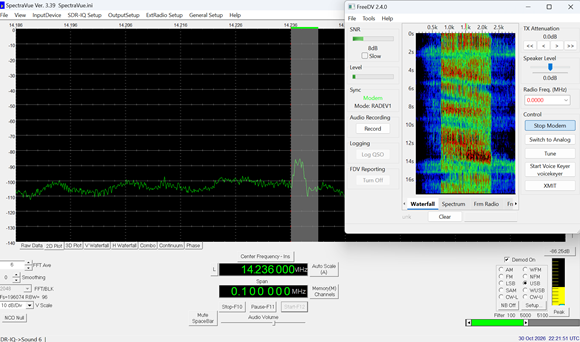
In my previous post I looked at the latest version of FreeDV RADE (Ref.1). The threshold performance compared to SSB is very impressive and the sound is much more natural than earlier versions. So the next step is to capture an off air signal to see how it sounds.
Rx Setup
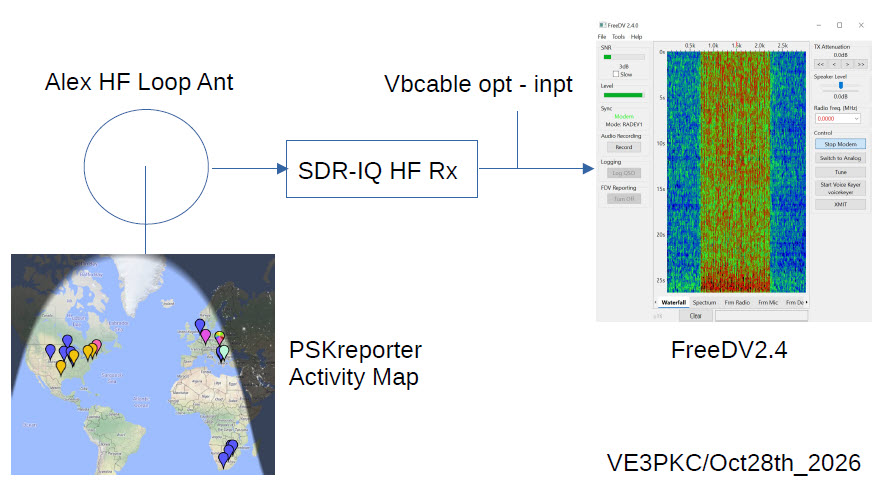
Figure 1 shows the off air signal setup. An Alex Loop HF antenna is used and the receiver is an RFSpace SDR-IQ. PSKreporter is scanned to see what FreeDV signals are active, then the antenna is peaked at that receive frequency. The Alex Loop is the ideal antenna for an apartment dweller (easy setup, low visible signature).
Off Air Signal Performance
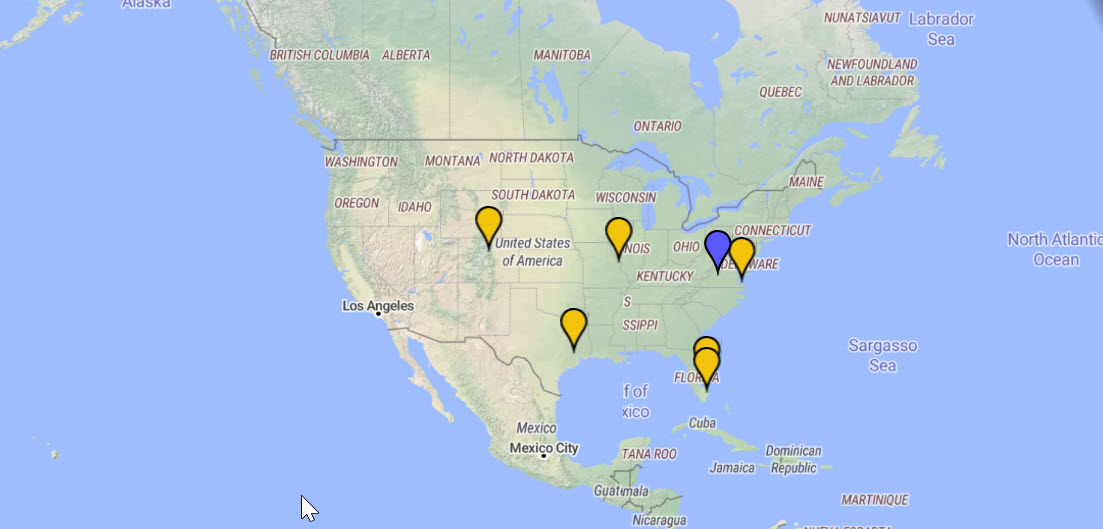
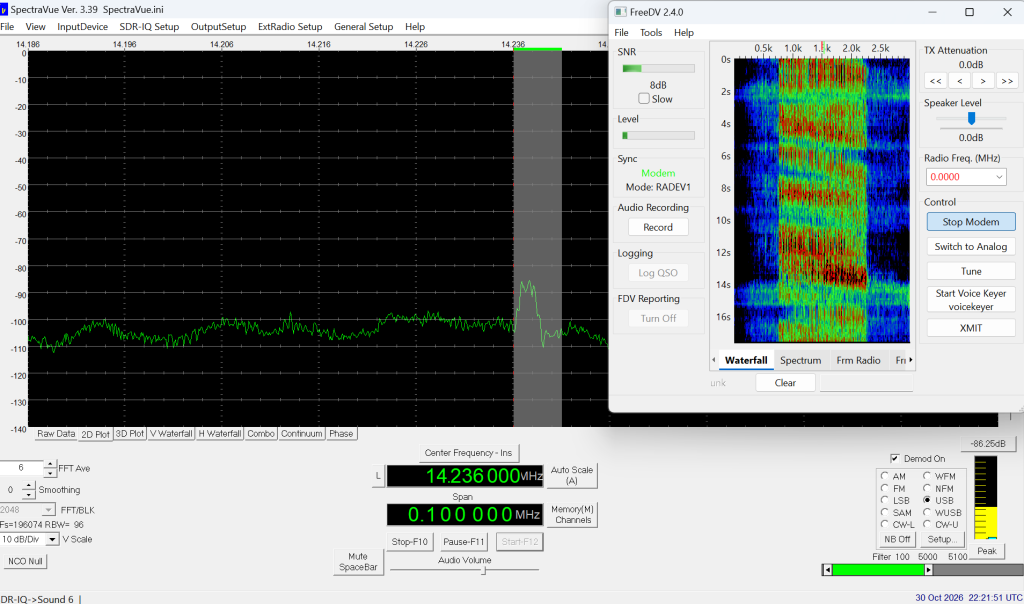
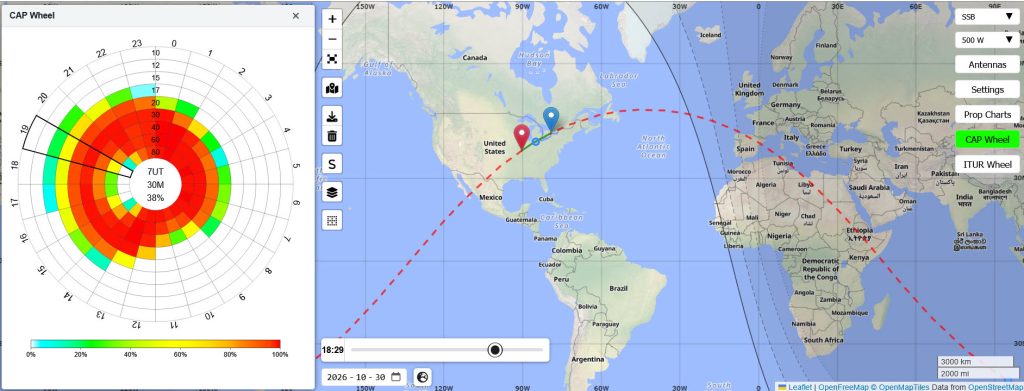
Figure 2 shows FreeDV activity for October 30th_2026_1430EDT. Within minutes of tuning in, I received a very clear signal from a station in Missouri peaking at 10dB. The FreeDV display SNR matched very closely the Rx level on the Spectravue Software. The signal audio can be heard on the YouTube video. The operator was running 500W with a 4 element beam antenna, so a very strong station. Figure 4 shows a VOACAP propagation prediction for this path showing a 80% probability for 20m at this time 1830UTC.
HF Radio Telecommunications Learn by Simulation
Please send your comments, questions and suggestions to:
contact:

References
#1. – “HF SSB vs. Digital Voice Radio AutoEncoder RADE”
https://jeremyclark.ca/wp/telecom/hf-ssb-vs-digital-voice-radio-autoencoder-rade/
#2. – “PSKReporter Map”
https://pskreporter.info/pskmap.html
#3. – “HF High Frequency Radio Learn by Simulation”
https://www.clarktelecommunications.com/simulation.ht
