Introduction

Last year I was successfully able to receive cubesats EIRSAT-1, Veronika and ENSO. A key element in their reception was a 433MHz BPF+LNA (Ref.1). Recently new cubesats have been launched, but working at a frequency closer to 400MHz. My existing LNA is broadband but the BPF cuts off above 400MHz so it can’t be used. Using the LNA directly without the BPF will overload the RTL-SDR. So I built a BPF using a 400MHz smt bpf module instead. I mounted the module on a surplus smt pcb as in Figure 1.
Measurement Setup
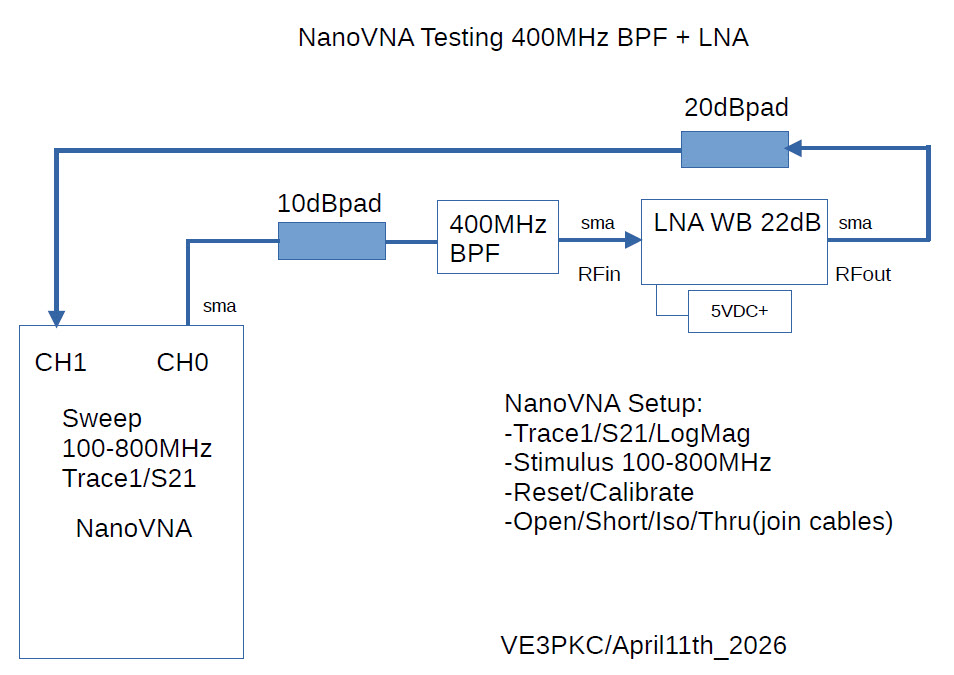

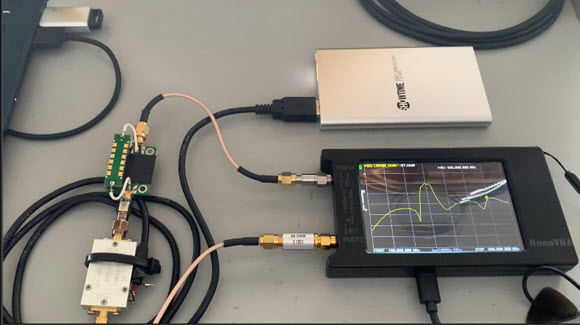
Figure 2 shows the Block Diagram of the Equipment Setup. Figure 3 shows the NanoVNA connected to the 400MHz BPF + LNA with the 10dB attenuator connected to the RFin of the BPF and the 20dB attenuator connected to the RFout of the LNA. The NanoVNA will measure the S21 characteristic or forward voltage gain of a network. First we measure a pad of 30dB (10dB + 20dB) which will have a flat response. Then we consider the filter/amplifier to be a filter with response of -10dB -InsertionLoss(BPF)+ Gain(Filter-Amp) -20dB = -10 -2.5+ 22.5 -20 or approx -10dB at the band pass frequency. The pads are chosen so that we don’t overdrive the amp (max +20dBm) and don’t overdrive CH1.
Measurement Results
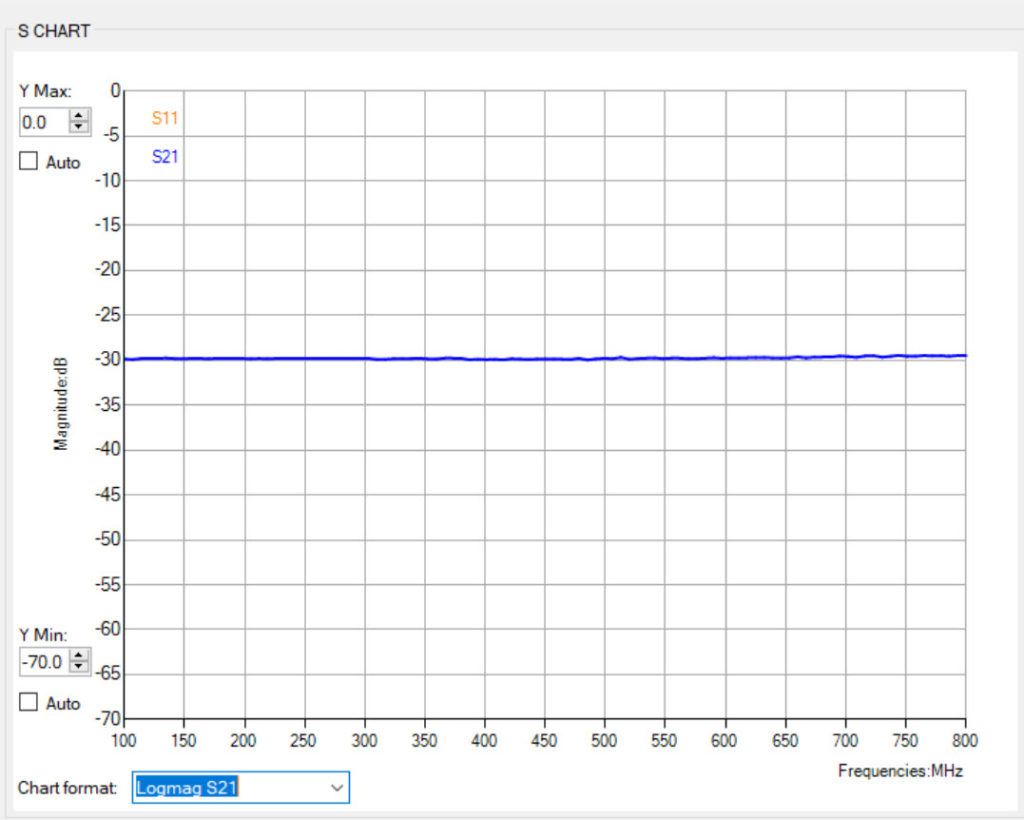
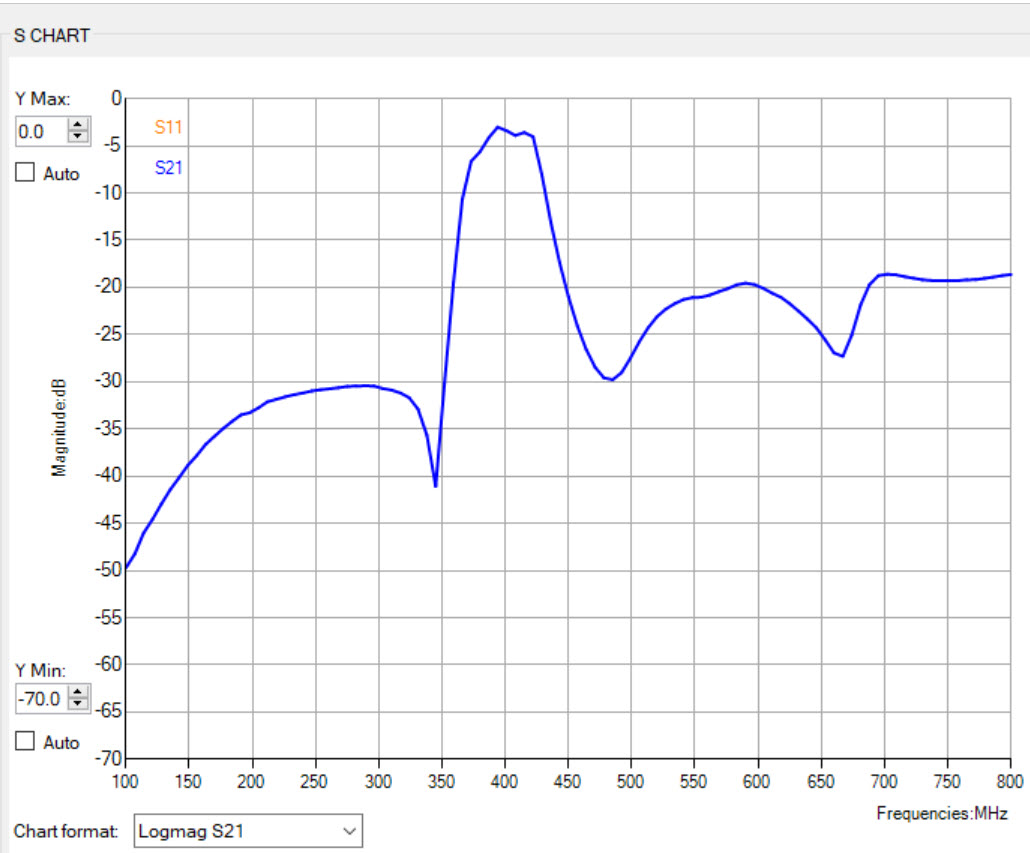

Figure 4 shows the 30dB attenuation between CH0 and CH1. Figure 5 shows the attenuation with just the BPF inserted. At 400MHz the attenuation is -2.5dB which corresponds to the BPF insertion loss. Figure 6 shows the attenuation of the BPF + LNA with a loss of -10dB at 400MHz. Comparing to the results of the 433MHz BPF (Ref.1), the characteristic is not as tight with about a 15 to 20dB difference. The key will be how well it receives the cubesats.
Please send your comments, questions and suggestions to:
contact:
References
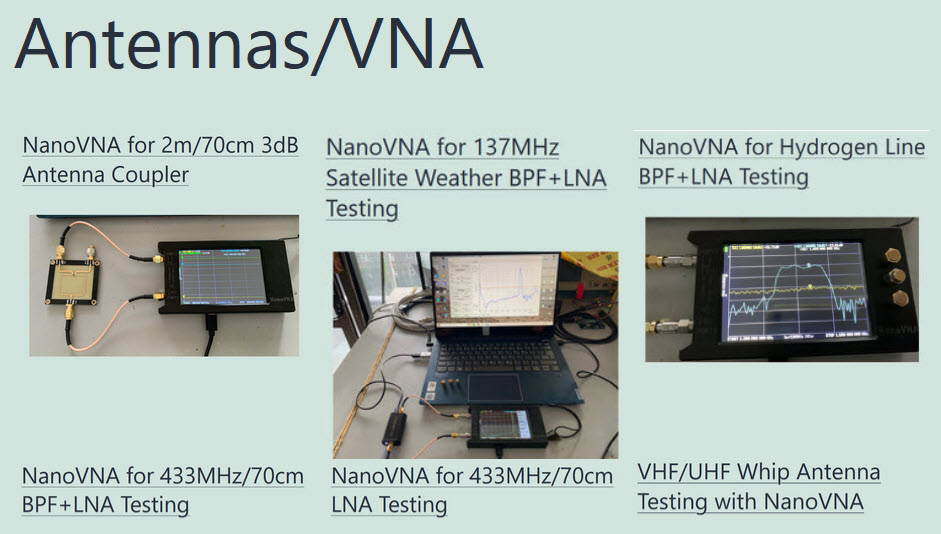
#1. – “NanoVNA for 433MHz/70cm BPF+LNA Testing”
https://jeremyclark.ca/wp/telecom/nanovna-for-433mhz-70cm-bpflna-testing/
